
What is Dambulla known for?
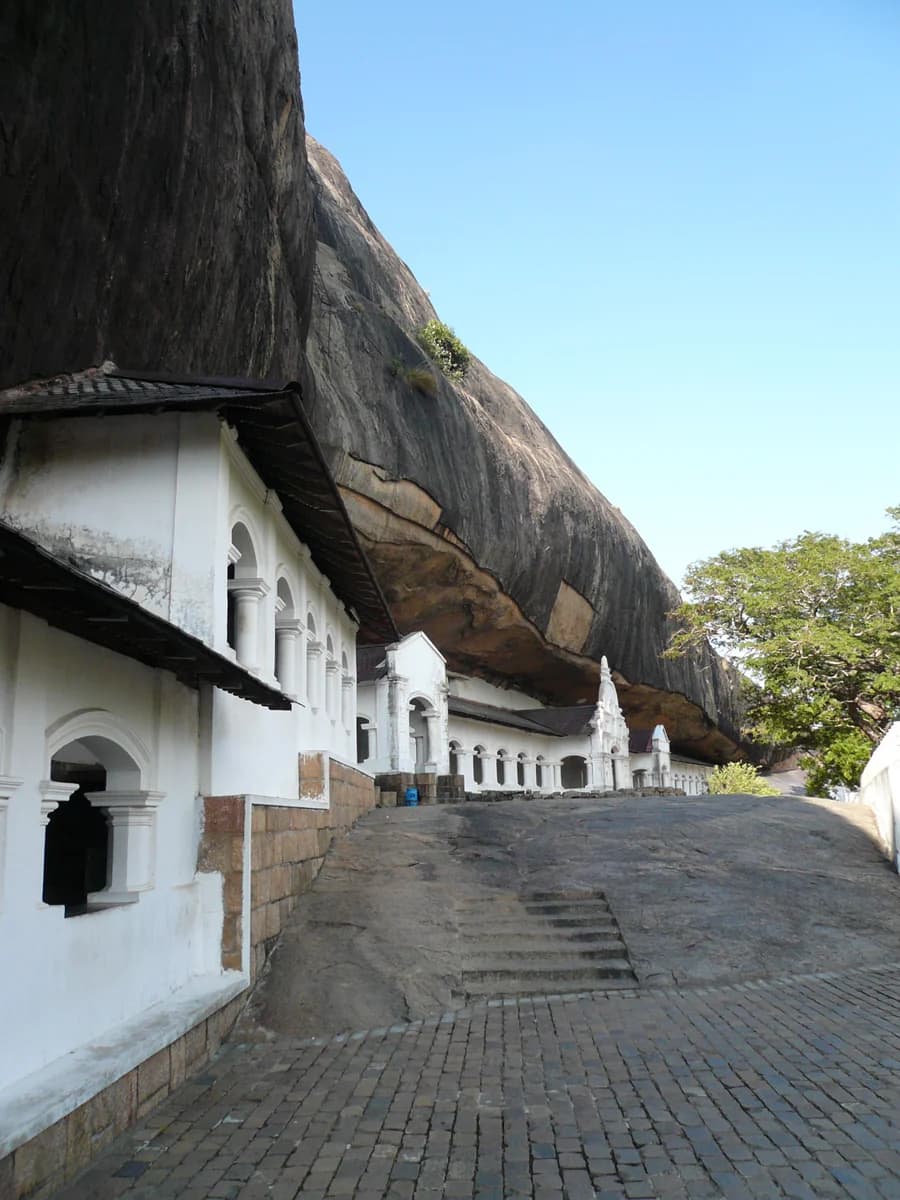
Rangiri Dambulla Cave Temple is a UNESCO World Heritage site with five sanctuaries, Buddhist paintings and statues. The cave temple is distinct from the general Dambulla town marker.
Dambulla invites you to look upwards, then look closer. The cave temple’s interest is in the relationship between the rock, painted surfaces and sculpted figures, not just the view from outside. It can be a powerful cultural chapter in a Sri Lankan journey when you give the visit room to unfold at a respectful pace.
Five sanctuaries beneath the rock
Rangiri Dambulla Cave Temple is a UNESCO World Heritage property with five sanctuaries. The caves create a very different experience from an open archaeological site: the rock itself forms part of the sacred setting. Move through the accessible spaces slowly and notice how the shrines differ. Allow time to look without blocking other visitors or those who have come to worship.
Paintings and statues worth slowing down for
UNESCO particularly recognises Dambulla’s Buddhist murals and statues. Rather than trying to photograph every surface, choose details to study: the way figures are arranged, how paintings follow the rock and how the interior changes between shrines. A knowledgeable guide can help explain religious and artistic context. Follow current photography rules and avoid touching decorated surfaces or leaning against historic fabric.
A pilgrimage site, not only an attraction
Dambulla has a long history as a place of pilgrimage. Your visit takes place within that continuing religious context. Wear appropriate clothing and follow local instructions on footwear and access. Consider the approach and walking involved before committing your whole group to the same plan. Allow breaks, and avoid scheduling the temple as a hurried stop between two demanding climbs.
Build a Cultural Triangle stay around it
Dambulla and Sigiriya offer complementary experiences: cave interiors and a rock-centred ancient city. An overnight base in the region can let you give them separate periods of attention. Anuradhapura is another substantial cultural visit, not an automatic extra on the same day. Use the car to connect chosen experiences and leave the final itinerary light enough to enjoy each one.
How to plan your visit
Make the temple the main visit of its own part of the day. Check the entrance, walking requirements and current visitor instructions before leaving your base. Dambulla can be paired with a Sigiriya stay, but give each experience time instead of treating both as quick roadside stops.
Choose a small number of cultural visits and leave time between them. Check site entry, clothing guidance and opening information with the official operator.
Before you set off.
A town marker is not the monument entrance; confirm parking and walking access separately.
Check the actual road route, your overnight parking and the latest conditions before travelling. A destination marker does not establish road access, an attraction entrance or permission to take a rental car off-road.
Road-trip ideas that include Dambulla
Sources & further reading
Published by Sri Lanka Car Rent. Content updated .
This is a research-based planning guide, not a report of a recent site visit. References support the place information; suggested pacing, base choices and rental questions are our editorial guidance. Confirm current access, opening times, charges and conditions with the relevant operator before travelling. How we prepare these guides ↗
Choose your car with Sri Lanka Car Rent.
Planning a visit to Dambulla? Start with your dates, passengers and luggage. Compare our self-drive categories, then prepare one rental inquiry with the details that matter to you.
Your inquiry opens in your chosen contact app. The actual vehicle, availability and written quote are confirmed by the team before booking.