
What is Anuradhapura known for?
Anuradhapura is a UNESCO-listed sacred city with a long history as a political and religious capital. Its monasteries and monuments form a broad heritage landscape.
Anuradhapura deserves time to unfold. Its appeal lies in the relationship between immense stupas, monastery remains, sacred trees and a city where pilgrimage continues. Choose a few places to understand well rather than trying to photograph every monument. The contrast between ancient masonry and present-day devotion is what makes a visit memorable.
Sri Maha Bodhi and a living sacred city
The sacred Bodhi tree is central to Anuradhapura’s Buddhist identity. UNESCO describes the city’s development around a cutting brought from the tree associated with the Buddha’s enlightenment. Approach the precinct as a place of worship: watch how visitors move, give offerings and make space for prayer. Its significance becomes easier to appreciate when the visit is not rushed.
Stupas and the scale of the monasteries
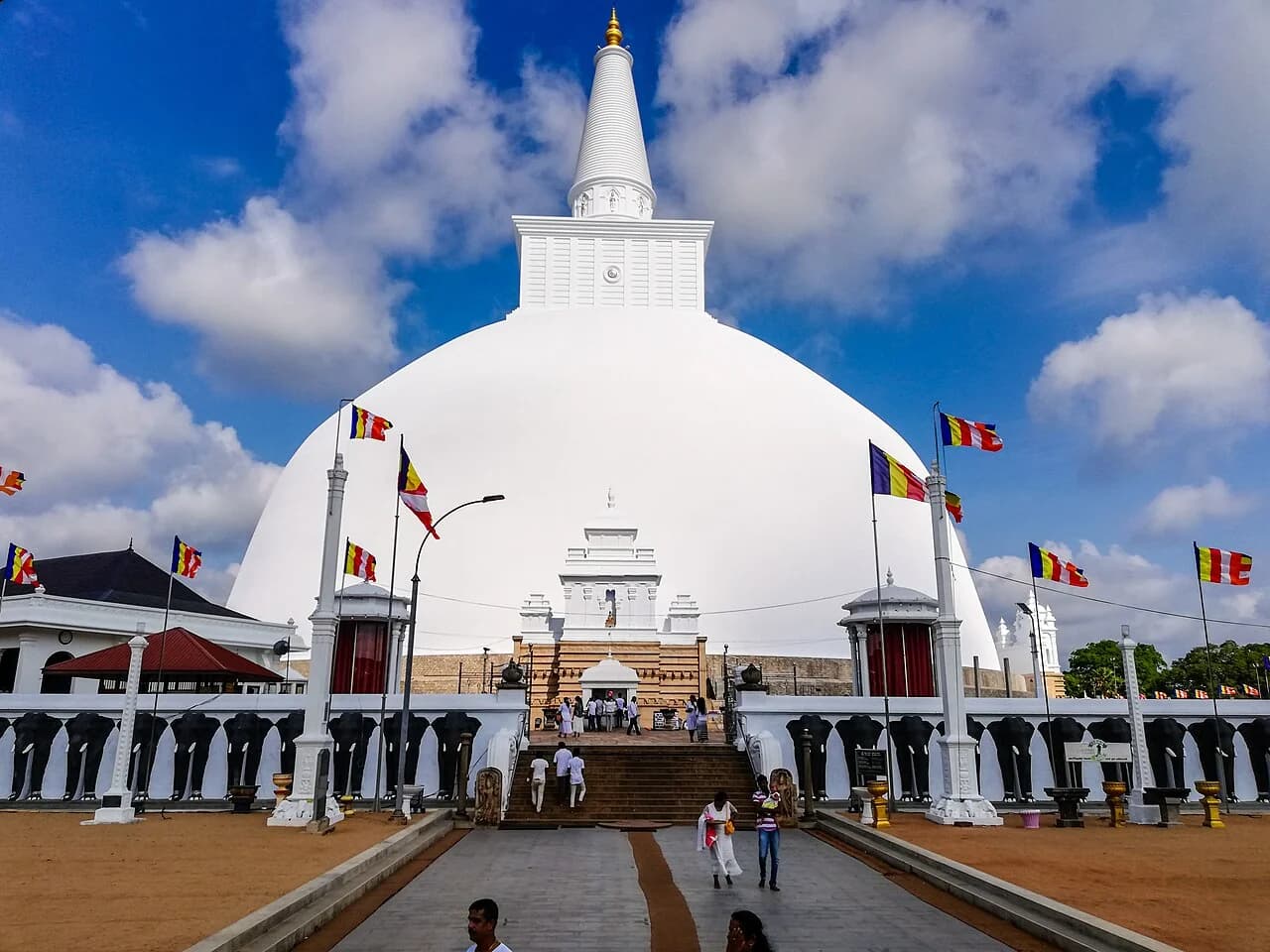
Ruwanwelisaya, Abhayagiri and Jetavanaramaya offer different encounters with the city’s monumental religious landscape. Their large structures were part of wider monastic settings, not isolated works of architecture. A guide or on-site interpretation can help connect what you see to the surrounding remains. Leave time to notice stonework and the spaces between monuments as well as the stupas themselves.
Isurumuniya and the pleasure of detail
Isurumuniya is associated with distinctive rock carvings, including the figures commonly called the Isurumuniya Lovers. Their interpretation is not a reason to turn a traditional story into a certain historical identification. Look instead at the workmanship and composition. After the scale of the larger stupas, a smaller detail-focused visit offers a rewarding change of pace.
Give the sacred city its own day
An overnight stay makes it easier to divide visits around rest and meals. Group nearby sites and check admission arrangements for your chosen places rather than assuming one ticket covers everything. Mihintale can be a separate outing from the same base. Keep that climb for a time when your group still has energy, rather than adding it automatically after a long archaeological circuit.
How to plan your visit
Choose a few sites for a considered visit rather than trying to see the whole sacred city between transfers. Give each stop time, follow current worship-site guidance, and arrange where to leave the car. Mihintale can be a separate outing from the same wider chapter.
Spread cultural visits across a stay instead of one tightly timed stop. Check site etiquette and arrangements, and give yourself breaks between visits.
Before you set off.
Verify tickets and access with the official site operator.
Check the actual road route, your overnight parking and the latest conditions before travelling. A destination marker does not establish road access, an attraction entrance or permission to take a rental car off-road.
Road-trip ideas that include Anuradhapura
Sources & further reading
Published by Sri Lanka Car Rent. Content updated .
This is a research-based planning guide, not a report of a recent site visit. References support the place information; suggested pacing, base choices and rental questions are our editorial guidance. Confirm current access, opening times, charges and conditions with the relevant operator before travelling. How we prepare these guides ↗
Choose your car with Sri Lanka Car Rent.
Planning a visit to Anuradhapura? Start with your dates, passengers and luggage. Compare our self-drive categories, then prepare one rental inquiry with the details that matter to you.
Your inquiry opens in your chosen contact app. The actual vehicle, availability and written quote are confirmed by the team before booking.