
What is Polonnaruwa known for?
Polonnaruwa is a UNESCO-listed ancient capital with monumental ruins associated with Parakramabahu I and earlier Chola rule. It offers a different historical setting from Anuradhapura.
Polonnaruwa invites you to piece together an earlier city through its surviving buildings, sculpture and open spaces. A rewarding visit is more than a sequence of ruins: it is a chance to understand how royal power, religion and water shaped life here. Arrive with a small set of interests and let the details hold your attention.
A capital with several historical layers
UNESCO identifies Polonnaruwa as Sri Lanka’s second capital after Anuradhapura and recognises both Chola-era Hindu monuments and the twelfth-century city associated with Parakramabahu I. That layered history is useful context before exploring. Rather than viewing every structure as part of one moment, use site information to distinguish the communities and periods represented.
Gal Vihara and sculpture in rock
Gal Vihara is one of the strongest reasons to linger in Polonnaruwa. Its rock-cut Buddha figures reward careful observation of posture, expression and the relationship between sculpture and stone. This remains a religious setting, so follow photography and footwear instructions. A quiet, unhurried look is more rewarding than treating the figures as a backdrop for a quick portrait.
Read the city through its buildings
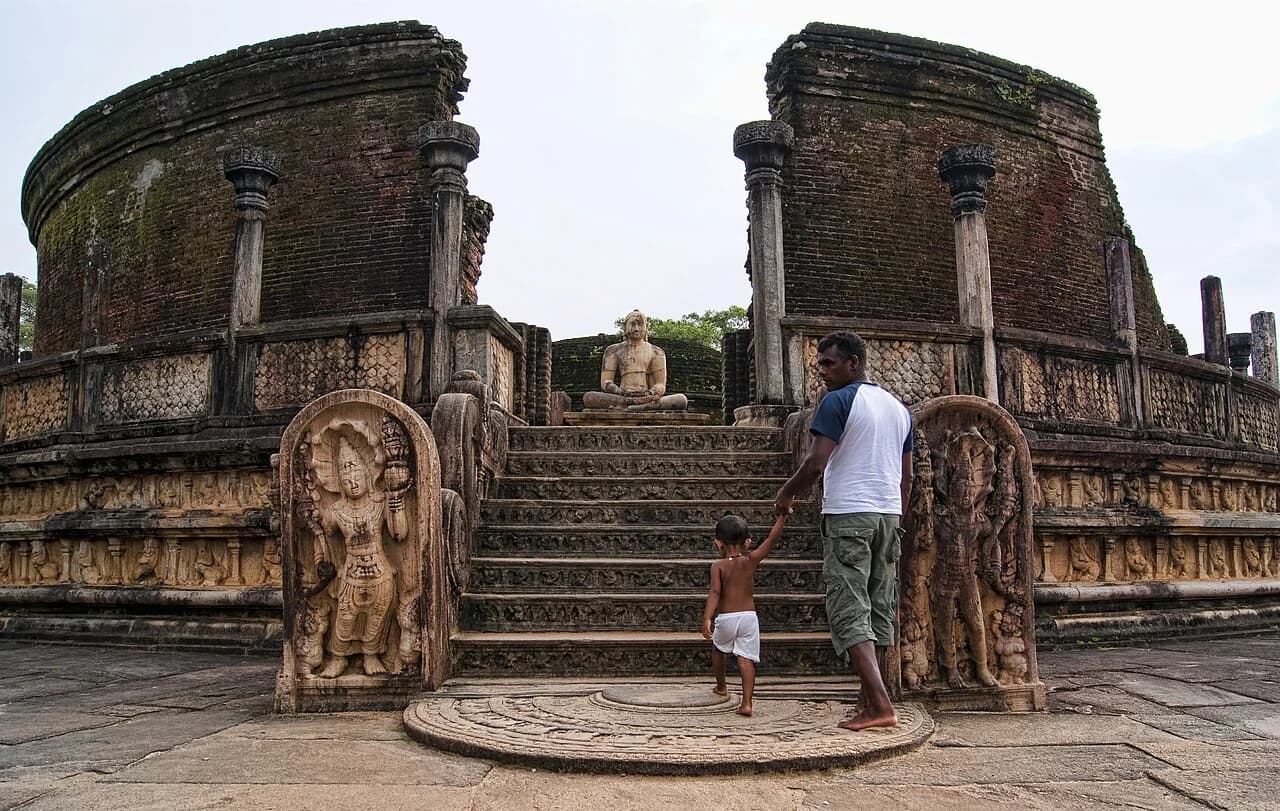
The palace remains, the Vatadage and other monuments let you move between royal and religious interests. Surviving columns, thresholds and carved details help give the ruins a human scale. Consider choosing one cluster to explore closely with interpretation before continuing. The experience is easier to follow when the day has a narrative rather than a long list of names.
Plan an archaeological day, not a transfer stop
Allow for walking, sun exposure and breaks between groups of monuments. Check the current ticket and visitor arrangements before arrival and confirm where to leave your vehicle. Polonnaruwa can anchor a cultural itinerary with Sigiriya or Dambulla, but the road journey between them still needs its own time. A dedicated visit avoids having to choose between the final monuments and a hurried evening drive.
How to plan your visit
Give the archaeological visit a clear place in your schedule. Check the current visitor route, admission arrangements and transport options within the site. Avoid scheduling it as a brief final stop after an already full day of cultural visits.
Make a manageable visit plan based on your interests. Keep the day flexible enough for breaks and check how best to move between the sites.
Before you set off.
Confirm entry arrangements and where the rental car may be parked.
Check the actual road route, your overnight parking and the latest conditions before travelling. A destination marker does not establish road access, an attraction entrance or permission to take a rental car off-road.
Road-trip ideas that include Polonnaruwa
Sources & further reading
Published by Sri Lanka Car Rent. Content updated .
This is a research-based planning guide, not a report of a recent site visit. References support the place information; suggested pacing, base choices and rental questions are our editorial guidance. Confirm current access, opening times, charges and conditions with the relevant operator before travelling. How we prepare these guides ↗
Choose your car with Sri Lanka Car Rent.
Planning a visit to Polonnaruwa? Start with your dates, passengers and luggage. Compare our self-drive categories, then prepare one rental inquiry with the details that matter to you.
Your inquiry opens in your chosen contact app. The actual vehicle, availability and written quote are confirmed by the team before booking.